
Mastering Modern Process: Google UX Design Specialization
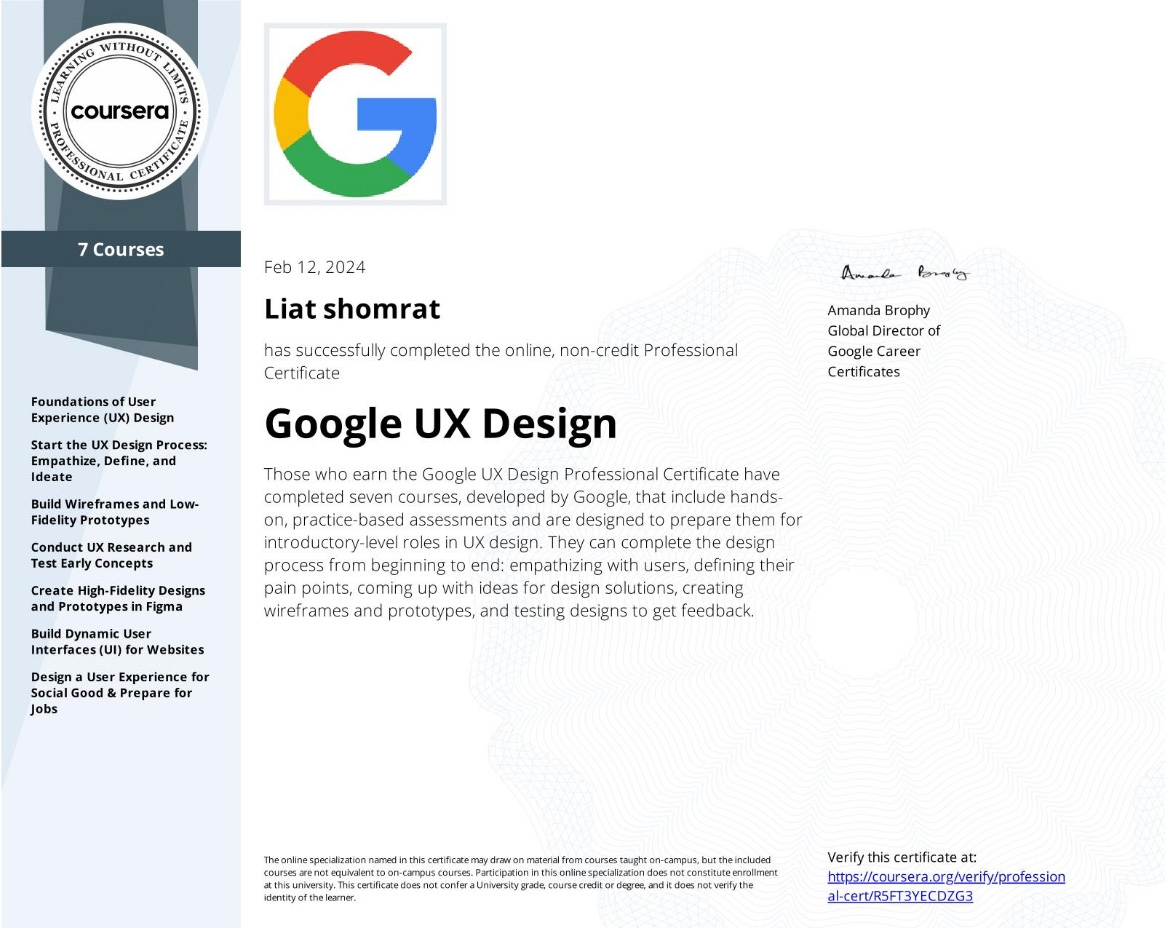
After driving product strategy and front-end development for decades, I completed the rigorous Google UX Design Specialization to formally bridge my deep industry experience with the latest methodologies in user-centered design, empirical research, and advanced prototyping.
Bridging 1998 Experience with 2026 Standards
The technology landscape evolves at lightning speed. While my foundation was built on decades of hands-on product launches, this specialization provided an intensive framework for the modern, end-to-end UX process. It isn’t just about learning tools; it is about mastering the psychology of user-centered design and applying it at an enterprise scale.
A true professional understands that design must be continuously refined. Moving from a pure webmaster mentality into a strategic architectural role requires a deep, uncompromising understanding of how users naturally navigate digital spaces.
The Core Value of the Google UX Design Specialization
Through this comprehensive curriculum, I solidified my expertise in conducting unbiased UX research, defining critical user pain points, and building scalable design systems. I translated these insights directly into high-fidelity, interactive prototypes using industry-standard tools like Figma.
Most importantly, this program reinforced my commitment to strict accessibility standards and equity-focused design. By prioritizing these elements, I ensure that the digital products I architect are truly usable, equitable, and enjoyable for all diverse user groups. It is not enough for a system to look beautiful; it must perform flawlessly for everyone.
The 7-Course Certification Roadmap
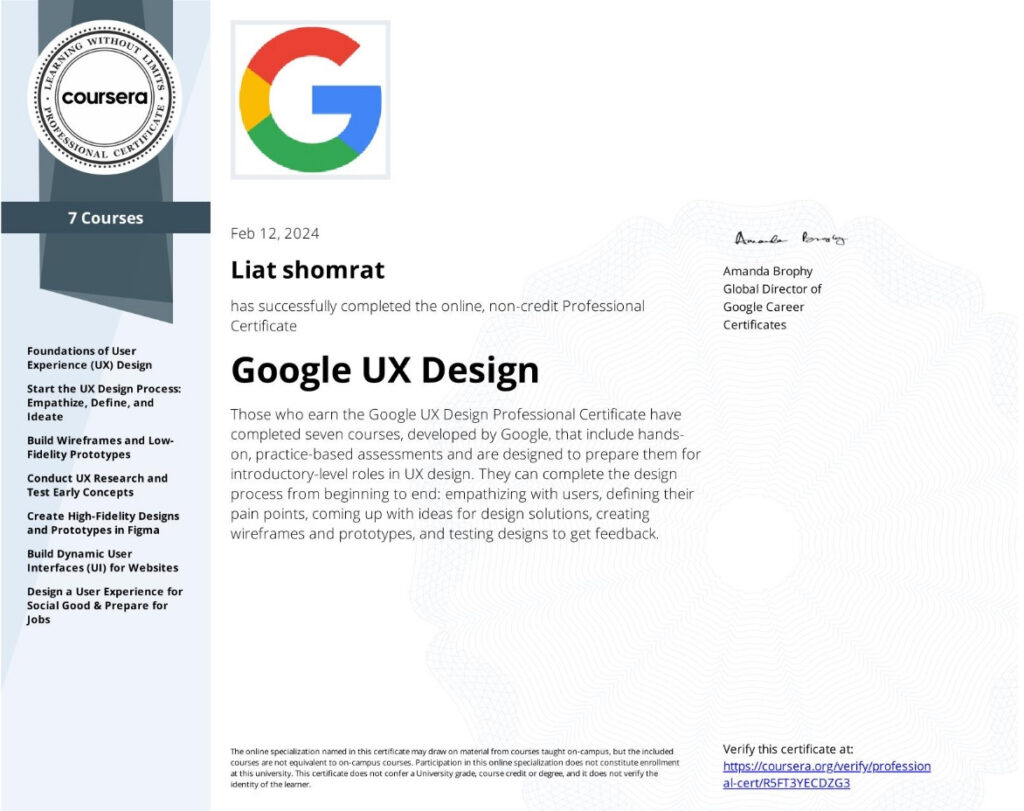
The Google UX Design Specialization is a massive, 200+ hour academic program. Earning the final certificate required the successful completion of seven rigorous courses. Each step demanded practical application, culminating in the creation of multiple end-to-end portfolio case studies that prove real-world competency.
Google UX Design Professional Certificate
Full Specialization Completed: February 2024
1. Foundations of User Experience (UX) Design
Core principles of user-centricity and equity-focused design.
2. Start the UX Process: Empathize, Define, Ideate
Mapping user journeys, building personas, and defining problem statements.
3. Build Wireframes and Low-Fidelity Prototypes
Translating research into foundational information architecture.
4. Conduct UX Research and Test Early Concepts
Executing usability studies and synthesizing qualitative data.
5. Create High-Fidelity Designs and Prototypes in Figma
Applying visual design principles and building interactive UI components.
6. Build Dynamic User Interfaces (UI) for Websites
Adapting designs across responsive web and mobile viewports.
7. Design for Social Good & Prepare for Jobs
Finalizing comprehensive case studies and portfolio development.
This continuous education journey ensures my structural logic is as sharp as my visual execution. You can see how these principles are actively applied in my real-world enterprise work by visiting my UX Design Portfolio.
Frequently Asked Questions
What is the Google UX Design Specialization?
The Google UX Design Specialization is a rigorous, 200+ hour professional certification program that covers the end-to-end user experience process, including empirical UX research, wireframing, high-fidelity Figma prototyping, and usability testing.
Why is formal UX research important for product design?
Formal UX research is critical because it removes bias from the design process. It allows architects to build digital products based on empirical user data, pain points, and usability testing rather than assumptions, ensuring a frictionless final product.